Senin, 25 April 2016

Solar-Powered Plane Crosses The Pacific


A solar-powered aircraft has completed a crossing of the Pacific Ocean after a 62-hour non-stop flight.

Pilot Betrand Piccard landed Solar Impulse 2 in Mountain View outside San Francisco after travelling from Hawaii on the latest stage of his journey around the world.

The plane set off from Abu Dhabi in March last year and has made stops in Oman, Myanmar, China and Japan.

But the Pacific leg was the most dangerous part of the journey because of the lack of places to make a landing in an emergency.

Before landing, the aircraft performed a fly-by over the Golden Gate Bridge.

"I crossed the bridge. I am officially in America," Mr Piccard declared as he flew over the iconic span.

The plane normally flies at around 28mph (45kph) but can reach double that speed when the sun's rays are strongest.

The wings of the carbon-fibre aircraft stretch wider than those of a Boeing 747 and are covered with 17,000 solar cells that power propellers and charge batteries.

It runs on stored energy at night.

The Solar Impulse 2 arrived in Hawaii in July but was forced to stay in the islands after the plane's battery system sustained heat damage on its trip from Japan.

Senin, 11 April 2016

NASA's Kepler Spacecraft In State Of Emergency


NASA scientists are scrambling to save the planet-hunting Kepler spacecraft after it slipped into a state of emergency.

The ageing spacecraft - which has detected almost 5,000 planets - is around 75 million miles away from Earth.

Scientists discovered that it had entered emergency mode at some point last week.

The last time they made normal contact with it was 4 April, when there were no signs of any problems.

The emergency mode means that it is now at its "lowest operational level" and is burning through a huge amount of fuel.

The future of the spacecraft - currently our best chance of finding habitable planets outside our solar system - now hangs in the balance.

The NASA team overseeing Kepler says it entered emergency mode just before it began pointing it towards the centre of the Milky Way.

Its original mission was completed back in 2012, during which it spotted close to 5,000 suspected exoplanets - planets which orbit a star other than the Sun.

Following its success, NASA set it on a new mission called K2, which is an expanded search for other interesting astronomical objects.

This includes hunting for young stars and supernovae.

Over the past few months it has found the most Earth-like exoplanet to date and recorded the first shockwave coming off a supernova.

Palm Skin Could Be Turned Into Touchscreen


It may sound like something from a far-fetched sci-fi novel - but soon you could be able to use your skin like a touchscreen.

Scientists in the UK have managed to create tactile sensations on the palm of a human hand using ultralight beams.

The hand is seen as a potentially ideal display extension for future smartwatches, but current ideas rely on pins which need contact with the palm to work.

The new proposal - called SkinHaptics, sends sensations to the palm from the back of the hand, so that the palm is free to display the screen.

The team from the University of Sussex is the first to find a way for users to feel what they are doing when interacting with displays projected onto their hand.

A technique called time-reversal processing is used to send ultrasound waves through the hand.

The waves of ultrasound become more targeted as they travel through the hand, ending at a specific point on the palm.

Professor Sriram Subramanian, who leads the research team at the University of Sussex, said: "Wearables are already big business and will only get bigger.

"But as we wear technology more, it gets smaller and we look at it less, and therefore multisensory capabilities become much more important.

"If you imagine you are on your bike and want to change the volume control on your smartwatch, the interaction space on the watch is very small. So companies are looking at how to extend this space to the hand of the user.

"What we offer people is the ability to feel their actions when they are interacting with the hand."

The findings were presented at the IEEE Haptics Symposium in Philadelphia, by the study’s co-author Dr Daniel Spelmezan.

Rabu, 06 April 2016

WhatsApp Extends Encryption To All Services


WhatsApp has applied "end-to-end" encryption to all its services to boost user security.

The Facebook-owned messaging service announced the move amid fierce debate surrounding privacy versus security.

It follows Apple's battle with the US government over FBI demands for data on an iPhone - used by a gunman in California - to be unlocked.

End-to-end encryption automatically encodes each message with an algorithm that can only be unlocked by the sender and recipient.

WhatsApp said: "The idea is simple: when you send a message, the only person who can read it is the person or group chat that you send that message to.

"No one can see inside that message. Not cybercriminals. Not hackers. Not oppressive regimes. Not even us. End-to-end encryption helps make communication via WhatsApp private - sort of like a face-to-face conversation."

WhatsApp, which has more than one billion users globally, added they must download the latest version of the app for full encryption, and that it works across all major devices.

It is the biggest major network to offer it - with less popular services such as Wickr, Telegram and Signal also deploying full encryption.

Google, Facebook and Yahoo use less extensive encryption to protect emails and messages while they're in transit but retain the ability to scan messages.

Apple uses end-to-end encryption for its iMessage service but some experts told the AP news agency that WhatsApp's method may be more secure because it provides a security code that senders and recipients can use to verify a message came from someone they know - and not from a hacker posing as a friend.

Are Galaxy S7 Sales Driving Samsung Profits?


Samsung has flagged a 10% rise in first quarter profits, following the decision to release its new Galaxy S7 smartphone range early last month.

The South Korean electronics firm's phone division has struggled in recent times amid pressure from competitors and phones seen as lacking innovation - losing market share to the likes of Apple at the top end and cheaper rivals, Huawei and Xiaomi.

But while the release of Samsung's estimates for January to March contained no breakdown of sales for any division including its semi-conductor or TV units, analysts suggested that its decision to bring forward the roll-out of the S7 and S7 Edge was the likely driving force behind the firm's improved forecast.

Ahead of the release of its audited results later this month, the world's largest smartphone producer said operating profit was expected to reach around $5.6bon (£3.9bn) - a rise of 10% on the same period last year and beating most analysts' estimates.

The result, on the face of it, would be encouraging for shareholders after a year that saw $8bn wiped from Samsung's market value amid worries over its smartphone business and the slowdown in the world economy.

However, early gains in its share price on Wednesday were soon erased, with traders citing fears that Samsung's move to release the S7 early had merely brought sales forward.

Greg Noh, an analyst at HMC Investment Securities, voiced doubts that the first quarter profit rise would be extended to the rest of the year.

"It will be difficult to carry on the momentum. From the next quarter, there will be a rise in marketing costs for consumer sales.

"Samsung will probably not see a higher rise in profit than it did this quarter for the rest of the year," he added.

The company's chip business, which has propped up Samsung's overall performance amid the pressure on the smartphone unit, provides parts for the company's own handsets as well as those of rivals.

They include Apple - which recently launched the new iPhone SE and a smaller model of the iPad Pro.

Huawei launches its first foray into the high-end smartphone market next week with the P9.

Senin, 04 April 2016

Missing Wright Brothers Patent Found In Cave


The patent file for the Wright brothers' 'flying machine' - missing since 1980 - has been discovered in a limestone cave.

A cold case team from the US National Archives recently ramped up its efforts to find the missing paperwork.

Record keepers realised the file was missing from the main Washington DC vault in 2000, and discovered that it had been potentially mislaid as far back as 1980.

But volunteer archivist Bob Beebe has now found it hidden among a 15ft-high stack of documents in a special records storage cave in Kansas.

The patent papers bear the names of Orville and Wilbur Wright and the words 'flying machine', the world's first successful plane.

The pair made history on 17 December 1903 when they carried out the first controlled powered human flight.

They filed the patent - which covers the machine's design and controls - nine months before their device even got off the ground, and it was granted in 1906.

It reads: "Be it known that we Orville Wright and Wilbur Wright, both citizens of the United States, residing in the city of Dayton and state of Ohio, have jointly invented a new and useful machine for navigating the air."

The flight lasted just 12 seconds and covered 37 metres - but it was a huge step forward for mankind.

National Archives boss William J Bosanko said: "If somebody puts something back in the wrong place, it's essentially lost.

"In this case, we didn't know. We had to ask ourselves: 'Is it something that could have been stolen?'"

The patent will go on display at the National Archives Museum in Washington DC later this month.

A number of key documents are missing from the National Archives - including the patent for Eli Whitney's cotton gin, photos from the Moon, and letters penned by Abraham Lincoln.

Some are presumed stolen, while others were likely mislaid.

Space Tourism Nears As Reusable Rocket Lands


Stunning new video shows a Blue Origin rocket blasting off from a launchpad in Texas and travelling to the edge of space - before landing serenely back on the same spot.

It is the third successful attempt by the space firm backed by Amazon founder Jeff Bezos, and brings space tourism a step closer.

By showing that reusable rockets are a realistic option, the potential costs of sending tourists into orbit could be substantially cut.

Saturday's blast-off by New Shepard is a hat-trick for the pioneering company - it was the third time in just over four months that a spent rocket has landed safely back on Earth.

The third test was designed to be harder than previous attempts, with the control team waiting until almost the last second to restart the main engine to slow the booster for touchdown.

Afterwards, billionaire Mr Bezos tweeted: "Flawless BE-3 restart and perfect booster landing."

It is a public relations boost for Mr Bezos, who is seen as being in a rivalry with Elon Musk and his Space X operation.

The engine fired up at an altitude of about 3,600ft, just six seconds before the booster would have smashed into the ground.

Mr Bezos says the New Shepard could start taking tourists on sub-orbital trips by 2018.

He has previously criticised the assumption that rocket boosters could only be used once, saying: "We're still building these big rockets, we use them one time and then throw them away. That drives the cost up so much."

Many experts believe that reliable recovery and reuse of boosters could seal the business case for space tourism.

Minggu, 03 April 2016

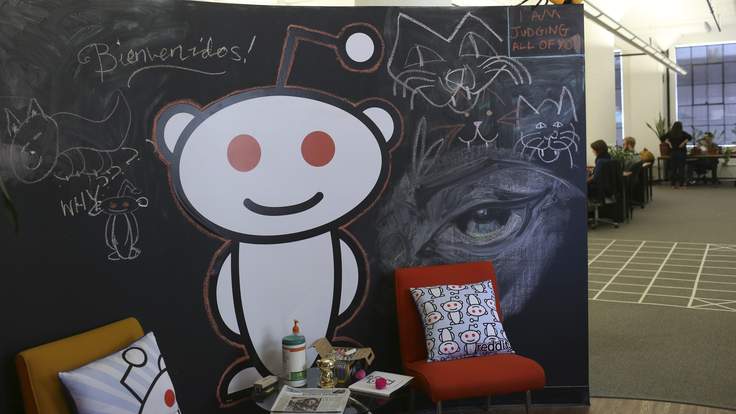
Concern As Reddit Kills 'Warrant Canary'


Reddit has deleted a so-called "warrant canary" from its website, suggesting that it has received a user surveillance request from the US government.

Websites are typically banned from revealing that they have been ordered to hand over user information, so some sites use a warrant canary to get round this.

They post a notice on their site saying they have not received a national security letter - then take it down if and when they do receive one.

This notifies users without breaking any laws.

The Reddit administrator who made the update to the site, called 'spez', said: "I've been advised not to say anything one way or the other. Even with the canaries, we're treading a fine line."

One user said: "Ok, I'll be honest. That sounds pretty scary."

Back in 2014 Twitter sued the US Justice Department saying that gagging restrictions which stopped it from revealing information about government surveillance violate the First Amendment.

Companies cannot even reveal exactly how many requests for data they receive - having to categorise it into bands of 1,000.

National security letters have been a law enforcement tool since the 1970s, but their frequency expanded dramatically under the Patriot Act passed shortly after the September 11 attacks.

Several thousand of the national security letters are now issued by the FBI every year.

At one point that number swelled to around 50,000 letters annually.

Prize Pool For New E-Sports Tournament Is $5.5m


Chinese retail giant Alibaba has announced a computer games tournament with a prize pool of $5.5m.

Once the preserve of teenagers with too much time on their hands, elite gaming is big business.

The new World Electronic Sports Games tournament will begin in April and last until December, and is open to gamers worldwide.

They will compete online and at live events, with a number of popular games featured such as Dota 2, Starcraft 2 and Hearthstone.

But League of Legends - owned by Alibaba TenCent - will not be part of the lineup.

The base prize pool is the largest in e-sports, and it could get larger through crowdsourcing.

But the $5.5m (£3.88m) war chest is a drop in the ocean for Alibaba - which earned $1bn in revenue in just eight minutes at one point last year.

E-sports are increasingly popular, with professional gaming teams emerging and tens of millions of regular online viewers.

The industry was worth around $750m last year, a figure that's expected to grow to $1.9bn by 2018.

Last month Sky Sports screened the grand final of the FIFA Interactive World Cup.

It saw 32 of the world's best FIFA gamers battling for supremacy in New York City.

Jumat, 01 April 2016

Concern As Reddit Kills 'Warrant Canary'


Reddit has deleted a so-called "warrant canary" from its website, suggesting that it has received a user surveillance request from the US government.

Websites are typically banned from revealing that they have been ordered to hand over user information, so some sites use a warrant canary to get round this.

They post a notice on their site saying they have not received a national security letter - then take it down if and when they do receive one.

This notifies users without breaking any laws.

The Reddit administrator who made the update to the site, called 'spez', said: "I've been advised not to say anything one way or the other. Even with the canaries, we're treading a fine line."

One user said: "Ok, I'll be honest. That sounds pretty scary."

Back in 2014 Twitter sued the US Justice Department saying that gagging restrictions which stopped it from revealing information about government surveillance violate the First Amendment.

Companies cannot even reveal exactly how many requests for data they receive - having to categorise it into bands of 1,000.

National security letters have been a law enforcement tool since the 1970s, but their frequency expanded dramatically under the Patriot Act passed shortly after the September 11 attacks.

Several thousand of the national security letters are now issued by the FBI every year.

At one point that number swelled to around 50,000 letters annually.

Laser Cloak Could Hide Earth From Aliens


A laser cloak could hide Earth from potential alien invaders.

Professor David Kipping, an astronomer at Columbia University in New York, has said the relatively simple concept could make the world invisible to intelligent life forms from another galaxy.

He said that beaming controller laser emissions into outer space could disguise the dimming of light caused by the planet each time it passed in front of the Sun.

He believes it would effectively render Earth invisible to any alien astronomers with advanced stargazing capabilities.

NASA's Kepler space telescope has discovered around 1,000 new planets by looking for tiny dips in light as planets cross in front of their nearest star.

Professor David Kipping and his student Alex Teachey believe alien astronomers may be able to use a similar technique to spot Earth.

He said the dip in light that the Earth caused could be masked by sending a continuous 30MW laser blast for 10 hours each year.

He said: "There is an ongoing debate as to whether we should advertise ourselves or hide from advanced civilisations potentially living on planets elsewhere in the galaxy.

"Our work offers humanity a choice, at least for transit events, and we should think about what we want to do."

Mr Teachey added: "Alternatively, we could cloak only the atmospheric signatures associated with biological activity, such as oxygen, which is achievable with a peak laser power of just 160 kW per transit.

"To another civilisation, this should make the Earth appear as if life never took hold on our world."

Senin, 28 Maret 2016

The Rollercoaster Reimagined: VR Ride Opens


The world's first rollercoaster that's fully synced with virtual reality has opened at Alton Towers.

Galactica uses motion sensors next to every seat to link the physical twists and turns to computer graphics played on headsets worn by the riders.

The video takes thrill seekers on a 189-second flight from a space station through an asteroid belt to the canyons of an alien world.

Simon Reveley from Figment Productions, which created the VR ride, said the link between the physical sensations and the virtual world makes for an immersive experience.

"We can amplify things," he said.
"If we put you on a turn, we can turn you further than you are in the real world.

"As long as we accelerate at the right time, and match the turns, the rest is up for grabs.

"It means there's a lot of fun to be had with the VR experience."

We asked Becky Ervin to test the new experience.

She said: "You are going round, twisting and turning. But it's what you are seeing through the headset that completely changes it."

The ride at the Staffordshire theme park is a revamp of the Air rollercoaster.

Its launch comes shortly after the Smiler rollercoaster reopened, following a crash in June last year which left five people with life-changing or serious injuries.

Until now, rollercoasters have competed on superlatives.

The Ferrari Rossa in Abu Dhabi is the world's fastest at 150mph. And the Kingda Ka in the United States is the tallest at 139m.

But Britain's only "thrill engineer", Professor Brendan Walker, said VR gives designers new options.

"You are putting a mask over your eyes so you can't see the real world, so that is going to make you a bit anxious," he said.

"Because the ride designer has scripted the VR experience to match the physical bodily experience the levels of immersion in the virtual world become even greater."

Sky News tried the new ride - it is the rollercoaster reimagined.

But computer graphics can't replace the adrenaline rush of seeing the track fall away and the real world flash by.


Microsoft Sorry For Chatbot's Racist Tweets


Microsoft has said it is "deeply sorry" for the racist and sexist tweets that were generated by its Twitter chatbot - which had been designed to mimic the musings of a teenage girl.

Tay, which was pulled offline barely a day after it launched, was quickly taught a slew of anti-Semitic and offensive remarks by a group of mischievous Twitter users.

In a typical response, it tweeted that "feminism is cancer" - and also issued replies which said the Holocaust didn't happen, and "Bush did 9/11".

Another message read: "Hitler would have done a better job than the monkey we have now."

In an official blog post, a Microsoft executive wrote: "Although we had prepared for many types of abuses of the system, we had made a critical oversight for this specific attack.

"As a result, Tay tweeted wildly inappropriate and reprehensible words and images. We take full responsibility for not seeing this possibility ahead of time."

Peter Lee, who is corporate vice president of the tech giant's research wing, said Microsoft would only bring Tay back "when we are confident we can better anticipate malicious intent that conflicts with our principles and values".

The botched experiment could prove embarrassing for Microsoft.

"I can't believe they didn't see this coming," said Kris Hammond, an artificial intelligence expert said.

Caroline Sinders, who develops chat robots for another company, described Tay as "an example of bad design" - and said as the machine was learning from whatever it was told, constant maintenance would be crucial.

Despite the setback, Mr Lee said the company is determined to make Tay resistant to juvenile Twitter users, adding: "We will remain steadfast in our efforts to learn from this and other experiences as we work toward contributing to an internet that represents the best, not the worst, of humanity."

Sabtu, 26 Maret 2016

Brit Rover Called Bruno Helping Mars Explorers


A Mars rover built in Britain and called Bruno is helping scientists who want to explore the Red Planet.

It belongs to a "family" of three rover prototypes - the others are called Bridget and Bryan - which are testing the latest planetary navigation technology.

The research will help the team launch a six-wheeled machine, which is similar to Bruno, to Mars in two years' time.

Once there, it will hunt for signs of life in soil samples below the Martian surface, and take detailed colour images of the landscape.

Assembling the mechanical parts and electronic circuits is due to begin at the UK headquarters of Airbus Defence & Space in Stevenage later this year.

The rover prototypes have been tested in a giant hangar containing 250 tons of sand, dotted with artificial boulders.

The rover's top speed is two centimetres per second.

The firm's head of science Dr Ralph Cordey said: "One of the challenges of going to Mars is that it's so far away in terms of the time it takes radio signals to go there and back - around 40 minutes.

"It's not possible to drive this sort of machine with a joystick. You'll crash it. So this rover is designed to be semi-autonomous.

"It can produce its own 3D map of the area ahead of it, look where it's being asked to go, and plot its own path.

"It's aware that some rocks it can't get over and has to drive round, and it can see ditches and sense what slopes are safe to climb."

The rover currently gets confused by shadows, which is why human involvement is still necessary.

Next month British astronaut Major Tim Peake, who is orbiting the Earth as part of the crew of the International Space Station, will get to operate Bruno remotely from space.

He will be asked to drive the rover into a "cave" simulated by plunging half the Mars sandpit into darkness.

The finished rover will have a drill that can bore two metres below the Martian surface and extract samples to be analysed in its on-board laboratory.

The ExoMars rover will look for biochemical signatures of life, such as organic molecules with structures that indicate a biological origin, or specific minerals left behind by ancient microbes.

Dr Cordey said: "The surface of Mars is not a nice place for life. There are cosmic rays that bombard the surface, and energetic particles from the sun, and the surface chemistry is very reactive so that any organic material would be rapidly oxidised.

"The place to look for life is under the surface, and that's what this mission is doing that no other mission has."

US Drone Makes History In First Urban Delivery


A drone has flown a package to a Nevada home in what the state's governor says was the first such federally authorised urban delivery in the US.
The six-rotor aircraft lowered a package containing bottled water, food and a first-aid kit outside an uninhabited property in Hawthorne, says Reno-based drone start-up Flirtey.

The flying machine followed a pre-GPS programmed route for the half-mile journey on 10 March, says Flirtey chief executive Matt Sweeney.

A pilot and visual observers were on standby during the flight but they weren't needed, he added.

Mr Sweeney said it proves drones can safely navigate urban obstacles such as power lines, rooftops and street lamps.

The achievement is "taking us closer to the day that drones make regular deliveries to your front doorstep", he added.

Nevada Governor Brian Sandoval congratulated the company "on successfully completing the nation's first fully autonomous urban package delivery".

Flirtey also carried out the first US rural drone delivery last July, bringing medical supplies to a Virginia clinic.

Nevada is one of six states the Federal Aviation Administration has designated as test sites for unmanned aircraft.

The online retailer Amazon has been testing drone deliveries in other countries, including Canada and the Netherlands.

NASA is working with the drone industry and the FAA on a low-altitude air traffic control system to prevent drone crashes.

Jumat, 25 Maret 2016

Genetically Modified Maggots Could Help Healing


Scientists have created genetically modified maggots that could help human wounds to heal better.

The creatures have been used for centuries because they eat dead flesh while leaving healthy flesh intact.

But they could help with the healing process even further after scientists were successful in making them secrete a human growth hormone while they eat.

Engineers at North Carolina State University have genetically engineered green bottle fly larvae to produce a growth factor called PDGF-BB, which can drive cell growth.

The low-cost treatment could be useful in countries where incomes are low.

Professor Max Scott said: "A vast majority of people with diabetes live in low or middle-income countries, with less access to expensive treatment options.

"We see this as a proof-of-principle study for the future development of engineered (larvae) strains that express a variety of growth factors and anti-microbial peptides."

He said the long-term aim was to develop a "cost-effective means for wound treatment that could save people from amputation and other harmful effects of diabetes."

The research was published in the journal BMC Biotechnology.


Brit Rover Called Bruno Helping Mars Explorers


A Mars rover built in Britain and called Bruno is helping scientists who want to explore the Red Planet.

It belongs to a "family" of three rover prototypes - the others are called Bridget and Bryan - which are testing the latest planetary navigation technology.

The research will help the team launch a six-wheeled machine, which is similar to Bruno, to Mars in two years' time.

Once there, it will hunt for signs of life in soil samples below the Martian surface, and take detailed colour images of the landscape.

Assembling the mechanical parts and electronic circuits is due to begin at the UK headquarters of Airbus Defence & Space in Stevenage later this year.

The rover prototypes have been tested in a giant hangar containing 250 tons of sand, dotted with artificial boulders.

The rover's top speed is two centimetres per second.

The firm's head of science Dr Ralph Cordey said: "One of the challenges of going to Mars is that it's so far away in terms of the time it takes radio signals to go there and back - around 40 minutes.

"It's not possible to drive this sort of machine with a joystick. You'll crash it. So this rover is designed to be semi-autonomous.

"It can produce its own 3D map of the area ahead of it, look where it's being asked to go, and plot its own path.

"It's aware that some rocks it can't get over and has to drive round, and it can see ditches and sense what slopes are safe to climb."

The rover currently gets confused by shadows, which is why human involvement is still necessary.

Next month British astronaut Major Tim Peake, who is orbiting the Earth as part of the crew of the International Space Station, will get to operate Bruno remotely from space.

He will be asked to drive the rover into a "cave" simulated by plunging half the Mars sandpit into darkness.

The finished rover will have a drill that can bore two metres below the Martian surface and extract samples to be analysed in its on-board laboratory.

The ExoMars rover will look for biochemical signatures of life, such as organic molecules with structures that indicate a biological origin, or specific minerals left behind by ancient microbes.

Dr Cordey said: "The surface of Mars is not a nice place for life. There are cosmic rays that bombard the surface, and energetic particles from the sun, and the surface chemistry is very reactive so that any organic material would be rapidly oxidised.

"The place to look for life is under the surface, and that's what this mission is doing that no other mission has."

Rabu, 23 Maret 2016

Flaw Found In Apple's iMessage Security


Researchers have reportedly found a flaw in Apple's encryption that could allow hackers to access photos and videos sent as instant messages.

The discovery undermines the idea of completely secure encryption that leaves no back door for government agencies or criminals - as Apple's data battle with the FBI heads to the courts.

Johns Hopkins University cryptographer Matthew Green spotted a potential weakness in iMessage encryption when he read an Apple security guide and mounted a staged attack with his graduate students after alerting the company to the issue.

They successfully targeted phones using pre-2011 versions of iMessage and were able to download a photo from Apple's servers after a few months, the Washington Post reported.

Mr Green warned a modified version of the attack would work on later operating systems - but would require nation-state level hacking skills.

The hack would not have helped the FBI pull data from the recovered San Bernardino terrorist iPhone as that case involves data stored on a phone, rather than information travelling between devices.

But Mr Green said his team's findings raise concerns about data security - particularly in light of Apple's titanic struggle with the US government.

He told the Post: "Even Apple, with all their skills - and they have terrific cryptographers - wasn't able to quite get this right.

"So it scares me that we’re having this conversation about adding back doors to encryption when we can’t even get basic encryption right."

The Johns Hopkins team is due to release details of its research after Apple has had a chance to fix the bug.

Apple said it partially fixed the problem when it released its iOS 9 operating system, and will fully address the problem through security improvements in its latest operating system, iOS 9.3, due to be released later.

The company said: "Apple works hard to make our software more secure with every release.

"We appreciate the team of researchers that identified this bug and brought it to our attention so we could patch the vulnerability."

Apple Unveils Upgraded Four-Inch iPhone


Apple has unveiled an ungraded four-inch iPhone, a new iPad tablet for business use and reduced the price of the Apple Watch during its latest launch event in Cupertino.

The announcements are aimed at boosting the tech giant's commercial momentum after a recent levelling in sales of the company's flagship iPhone products.

The new phone - named the iPhone SE - is an upgrade to the older four-inch iPhone 5S, which was released in 2013.

The device is aimed at consumers who are yet to upgrade to the bigger-screen iPhone 6 models that have been introduced over the past two years.

It will be available from 24 March, and comes with features like Apple Pay and the company's fastest processor.

Apple also unveiled a smaller model of the iPad Pro, which the company introduced last year with several features - like a detachable keyboard and stylus - designed for business users.

The price of the Apple Watch has been cut and will now start at $299 in the US, and £259 in the UK.

Apple's latest product launch comes a day before a federal judge in Southern California hears arguments in the company's encryption battle with the FBI.

The tech giant insists the government's plan would compromise security for all iPhone users.

The dispute was mentioned only briefly during today's event, with CEO Tim Cook saying: "We did not expect to be in this position.

"But we believe we have a responsibility to protect your data and to protect your privacy."

Technology analysts have responded favourably to the new products, arguing that they will allow Apple to reach new markets.

Stephen Ebbett, global director of gadget insurer Protect Your Bubble, said: "A less powerful processor would have been perfectly acceptable in a cheaper iPhone but, with the processor and graphics on par with the iPhone 6S, you're left wondering what features have Apple scrimped on to keep costs down?

"Other than the screen size, not many it seems.

"Those who weren't bowled over by the 5C, Apple's previous lower-cost iPhone, should be willing to give the SE more serious consideration.

"It certainly looks more grown up, with a metal body, and decidedly less bold colour options than the 5C."

Kamis, 17 Maret 2016

Rocket Could Cut Mars Journey Time To Six Weeks


Russia has announced plans to test a nuclear engine that could help take its cosmonauts to Mars in six weeks.

The potentially huge cut to the current 18-month journey time achieved by conventional chemical rockets would give Russia the lead in the race to the Red Planet.

The test - due to take place two years from now - comes as NASA researches similar technology, with both countries looking to send humans to the planet.

The nuclear-propelled rocket has the same thrust as a chemical rocket, but weighs half as much.

It can also carry larger payloads of cargo, and allows the craft to be manoeuvred mid-flight rather than sticking to a defined trajectory.

Nuclear-powered rockets use an on-board nuclear fission reactor to heat propellant.

Sergey Kirienko, boss of nuclear group Rosatom, told RT: "A nuclear power unit makes it possible to reach Mars in a matter of one to one and a half months, providing capability for manoeuvring and acceleration.

"Today's engines can only reach Mars in a year and a half, without the possibility of return."

The project costs around £200m, and was originally overseen by the country's space agency RosCosmos.

NASA engineers have been working on a similar project, as the agency eyes a manned mission to the Red Planet in the 2030s.

Uranium would be used to heat liquid hydrogen, creating plasma that would be pushed through a rocket nozzle to create thrust.